Vendor Consolidation in Litigation: What Legal Teams Gain Beyond Cost Savings
July 22, 2026
Technology
Vendor Consolidation In Litigation
Key Takeaways
|
Legal teams today work with more litigation support providers than ever before. Court reporting firms, records retrieval vendors, process servers, expert witness providers, eDiscovery firms, legal staffing companies, and technology platforms all play important roles in modern litigation.
While vendor consolidation is often associated with procurement initiatives and cost reduction, many organizations are discovering that operational complexity has become the larger challenge. As litigation workflows become increasingly data-intensive, legal departments, law firms, and insurance carriers are looking for ways to improve visibility, reduce administrative burden, and streamline the management of litigation support services.
For many organizations, vendor consolidation is no longer simply about lowering expenses. It is about creating a litigation support environment that is easier to manage, easier to oversee, and better positioned to support successful outcomes.
What Is Vendor Consolidation in Litigation?
Vendor consolidation is the practice of streamlining litigation support services through fewer providers or a more connected vendor ecosystem.In a litigation environment, this may involve consolidating services such as court reporting, records retrieval, process service, expert witness support, legal staffing, and litigation technology solutions. The objective is not always to reduce the number of vendors at all costs. Instead, legal teams often pursue vendor consolidation to reduce workflow complexity and improve coordination across matters.
For example, a law firm may work with separate providers for records retrieval, court reporting, process service, and litigation technology. While each vendor may perform well independently, managing multiple relationships often requires additional communication, duplicate administrative work, and fragmented reporting. Consolidating those workflows through a more connected service model can help improve efficiency without sacrificing service quality.
Why Are Legal Teams Consolidating Vendors?
Modern litigation relies on a growing network of specialized providers. A single matter may involve records retrieval, court reporting, expert witness support, legal staffing, process service, and multiple technology platforms.While specialization provides valuable expertise, it can also create operational challenges as organizations coordinate more relationships across increasingly complex matters. At the same time, law firms, insurance carriers, and corporate legal departments face ongoing pressure to improve efficiency while managing growing volumes of information and litigation activity.
As a result, many organizations are reevaluating how they structure vendor relationships. Vendor consolidation has become one strategy for creating a more coordinated litigation support model without sacrificing access to specialized services.
What Problems Does Vendor Sprawl Create?
Working with multiple vendors is not inherently problematic. However, challenges often emerge when litigation support functions become distributed across numerous providers, systems, and communication channels.Legal teams may find themselves managing separate billing processes, reporting structures, contacts, and workflows for the same matter. Information frequently must be shared between organizations, while updates and documentation become dispersed across emails, spreadsheets, portals, and external systems.
The result is often a more administrative-intensive process. Attorneys, legal operations professionals, and support staff can spend significant time coordinating activity between providers rather than focusing on litigation strategy, client service, and case outcomes.
How Does Vendor Sprawl Make Litigation Data Harder to Manage?
Security discussions often focus on whether individual vendors maintain appropriate cybersecurity controls. While vendor evaluation remains important, many legal teams encounter a different challenge: maintaining visibility and oversight as information moves throughout a growing vendor ecosystem.Litigation matters routinely involve protected health information, personally identifiable information, confidential business records, expert work product, financial documents, and privileged communications. As more vendors participate in a matter, information may be stored, transferred, or accessed across multiple systems and environments.
Even when individual vendors maintain strong security programs, each additional provider may introduce another repository, another set of users, another file transfer process, and another potential point of exposure. The challenge becomes less about any single vendor and more about maintaining effective governance across an increasingly interconnected network of providers.
The issue of managing information across multiple organizations is not unique to litigation. The 2013 Target data breach remains one of the most frequently cited examples of third-party risk after attackers gained access through credentials associated with an external HVAC vendor before moving deeper into Target's network. While litigation support workflows differ significantly from retail operations, the broader lesson remains relevant: every additional vendor relationship introduces another system, another access point, and another layer of oversight that must be managed effectively. As legal teams work with more providers, maintaining visibility into where sensitive information resides, who has access to it, and how it moves between organizations can become increasingly complex.
Organizations across industries are increasingly focused on governance and oversight as technology ecosystems become more complex. A recent Norton Rose Fulbright litigation survey highlighted growing litigation exposure related to cybersecurity and technology risks, reinforcing the importance of maintaining effective oversight across third-party relationships.
This does not mean organizations should avoid specialized providers or consolidate solely for security reasons. Rather, many law firms, insurance carriers, and legal departments are looking for ways to reduce unnecessary complexity. F ewer handoffs, fewer systems, and more connected workflows can make it easier to oversee sensitive information while supporting stronger governance throughout the litigation lifecycle.
For organizations evaluating the security and reliability of legal technology providers, our article on vendor due diligence for AI legal technology explores that topic in greater detail.
What Factors Should Legal Teams Consider in Vendor Management?
Effective vendor management involves much more than pricing. Legal teams should evaluate whether a provider can support long-term operational goals and fit naturally within existing workflows.Service breadth is often one consideration. Providers that support multiple litigation support functions may help reduce the number of external relationships that teams must manage across a matter. Scalability is another important factor. Litigation volume can fluctuate significantly, and providers should be able to support changing workloads without sacrificing service quality or responsiveness.
Technology compatibility has become increasingly important as legal operations become more technology driven. Most law firms, insurance carriers, and corporate legal departments have already invested heavily in case management systems, matter management platforms, and established workflows. Adopting a new vendor should not require abandoning those investments or forcing users to learn an entirely separate software environment.
|
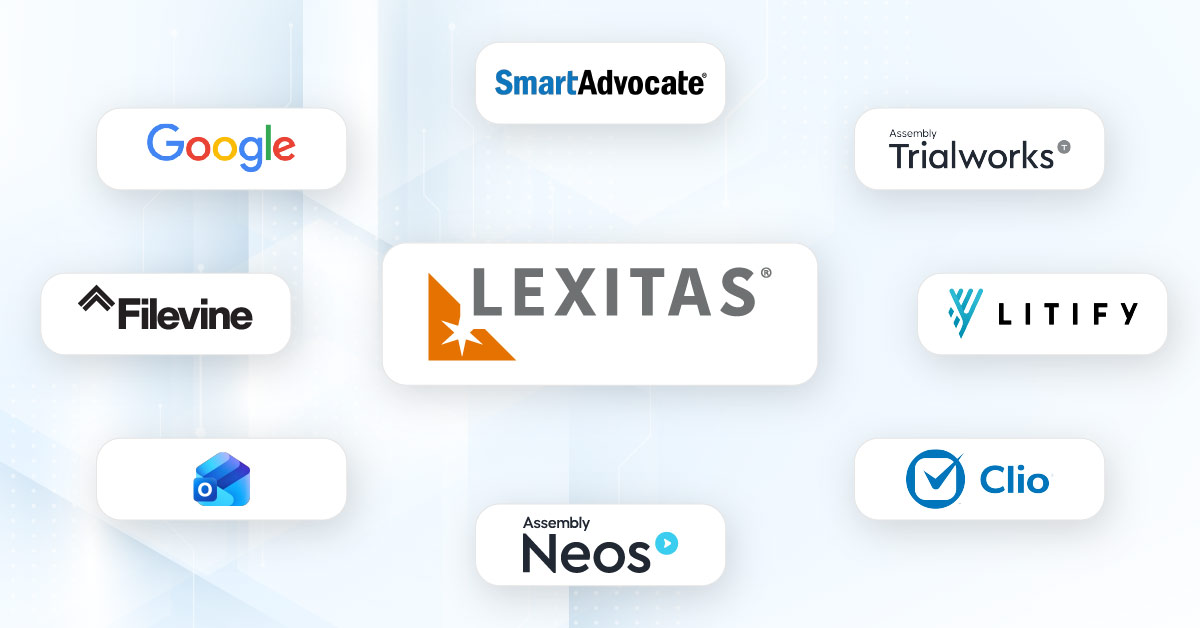
Instead, legal teams should consider how a provider's technology works with the tools they already use. For example, eLaw integrates with a variety of case management systems, allowing court information and litigation activity to flow into existing workflows rather than requiring users to manage another standalone platform. This allows legal teams to access important court information within processes that are already familiar to them. |
 |
Organizations should also consider responsiveness, reporting capabilities, governance practices, and service quality. The strongest vendor relationships are often those that support operational efficiency while complementing the way legal professionals already work.
How Are Vendor Management Systems Changing Litigation Operations?
As litigation grows more complex, many organizations are adopting vendor management systems and related legal operations technology to improve oversight across providers and matters.Rather than relying on spreadsheets, emails, and multiple portals, these platforms can provide a consolidated view of service activity, requests, deadlines, and reporting. This can help legal operations teams monitor progress, identify bottlenecks, and make more informed operational decisions.
The greatest value often comes when these platforms integrate with existing workflows. The goal is not simply to track vendors. It is to create a more connected litigation support environment where information is easier to access and manage.
When Does Vendor Consolidation Make Sense?
Vendor consolidation does not make sense for every organization or every matter. Some specialized cases may require highly specific expertise that is best obtained through multiple providers.However, consolidation may be worth evaluating when administrative complexity begins to outweigh the benefits of maintaining separate vendor relationships.
To evaluate whether vendor consolidation may improve operations, legal teams should consider the following questions:
- Are multiple vendors performing related functions across the same matters?
- Does information frequently move between providers?
- Are team members entering the same matter information into several systems?
- Is it difficult to obtain a complete status update across active matters?
- Are reporting, invoicing, and communication processes becoming increasingly fragmented?
- Would a more connected workflow improve efficiency or reduce administrative effort?
How Does Vendor Consolidation Support Better Legal Matter Management?
At its core, vendor consolidation is a legal matter management strategy.When communication, reporting, and workflows become more connected, legal teams often gain a clearer understanding of matter activity. They can more easily track progress, identify outstanding requests, and locate the information needed to make decisions.
Reducing handoffs between providers may also shorten administrative processes and simplify coordination among internal and external stakeholders. Teams spend less time managing workflows and more time focusing on litigation strategies.
Consistency is another important benefit. Standardized workflows, communication processes, and reporting structures can create a more predictable experience across matters. This consistency can help improve efficiency while supporting stronger operational oversight.
For legal departments, law firms, and insurance carriers alike, these benefits ultimately contribute to more effective legal matter management.
What Does a Connected Litigation Support Ecosystem Look Like?
Many organizations are moving beyond traditional vendor management and toward more connected litigation support ecosystems.Rather than coordinating separate providers for records retrieval, court reporting, experts, process service, staffing, and technology, legal teams increasingly seek operating models that bring those services together in a more unified manner.
The objective is not simply convenience. A connected ecosystem can help improve coordination across the litigation lifecycle, reduce administrative effort, and create a more consistent experience for legal teams managing complex matters.
At Lexitas, this approach is reflected in our ability to support multiple litigation workflows through a single provider relationship while connecting those services through tools such as LexitasConnect and technology integrations like eLaw. By combining service breadth with workflow connectivity, legal teams can reduce unnecessary friction without giving up access to the specialized support they require.
Why Vendor Consolidation Is Becoming an Operational Strategy
Vendor consolidation is no longer solely a procurement initiative. As litigation generates more information, involves more stakeholders, and relies on more technology, organizations are increasingly evaluating how vendor relationships affect efficiency, governance, and overall matter management.The future of vendor management may be less about working with fewer vendors and more about creating a litigation support ecosystem that is easier to coordinate, easier to oversee, and better equipped to support successful legal outcomes.
FAQs About Vendor Consolidation in Litigation
What is vendor consolidation in litigation?
Vendor consolidation is the practice of streamlining litigation support services through fewer providers or a more connected service ecosystem to reduce operational complexity and improve workflow management.Why are legal teams consolidating vendors?
Many organizations pursue vendor consolidation to improve visibility, reduce administrative burden, simplify communication, and support stronger legal matter management rather than focusing solely on cost reduction.Does vendor consolidation only reduce costs?
No. While cost savings may occur, many legal teams view vendor consolidation as an operational strategy that improves efficiency, oversight, and workflow coordination.How does vendor consolidation improve legal matter management?
Vendor consolidation can help centralize information, reduce unnecessary handoffs, improve visibility, and simplify communication across litigation workflows.What are the risks of managing too many litigation vendors?
Vendor sprawl can contribute to communication challenges, duplicate administrative work, fragmented case information, reduced visibility, and increased workflow complexity.What factors should legal teams consider in vendor management?
Legal teams often evaluate service breadth, scalability, workflow compatibility, responsiveness, reporting capabilities, visibility, and governance support when assessing litigation support providers.How do vendor management systems support litigation operations?
Vendor management systems can help centralize information, improve reporting, provide better visibility into service activity, and reduce administrative complexity across litigation matters.Related Resources

Articles
Technology
AI Legal Tools vs General AI
Understand the difference between AI legal tools and general AI. Learn when consumer AI falls short, how legal specific AI supports litigation workflows, and what legal teams should consider for accuracy, security, and defensibility.
Read More
Articles
Technology
Legal Automation in 2026 Explained
Legal automation in 2026 is practical and present. 2026 is a turning point because legal AI adoption crossed from “interesting” to “operational,” and client expectations are now explicit.
Read More
Articles
Technology
Legal Calendaring Software: Why Every Law Firm Needs It
Legal calendaring software helps law firms manage court deadlines, reduce risk, and maintain compliance. Learn why purpose-built calendaring is essential for modern litigation teams.
Read More