Court Reporting
Lexitas has experienced court reporters to cover your depositions and the local staff to make your job easier.
Schedule a depositionCourt Reporting Services & Products
Lexitas offers expert court reporting services nationally and internationally, catering to a wide range of litigation practice areas. Our technology makes scheduling fast and easy; gives you online access to all your deposition materials; and provides a seamless remote experience.Providing Local Court Reporters You Can Trust
Lexitas delivers professional court reporting services with nationwide coverage, ensuring legal proceedings are documented with accuracy and efficiency. Our court reporting firm employs highly skilled court reporters who specialize in real-time transcription and verbatim records, supporting law firms and corporate legal teams across the United States.Accurate and timely deliverables |
Innovative technology for remote depositions |
Outstanding service provided by local teams |
Reliable and highly proficient court reporters |
Quick and easy scheduling and confirmations |
AI-Enabled Deposition Summaries
Deposition Insights™ leverages the latest advancements in natural language processing and machine learning to streamline the analysis and summarization of deposition transcripts.4 Transcript Versions To Work With
- Deposition Outline: A structured, easy to consume bulleted overview of the deposition and case.
- Deposition Summaries: Condenses hours of content into succinct summaries. Four types of summaries are provided
- Visualization: Provides a visual analysis and quick-reference view of key issues, topics, and foundational testimony
- PDF Transcript: PDF version of the transcript for easy navigation
Deposition Summaries
- Detailed Summary: A longer narrative summary of the deposition.
- High-Level Summary: A short, narrative synopsis of the deposition at a high level.
- Page-Line Summary: A traditional summary separated into topics with relevant page-line references.
- Topical Summary: A structured summary of the deposition broken into topics to make it easy to scan.
Security
Experienced Court Reporters
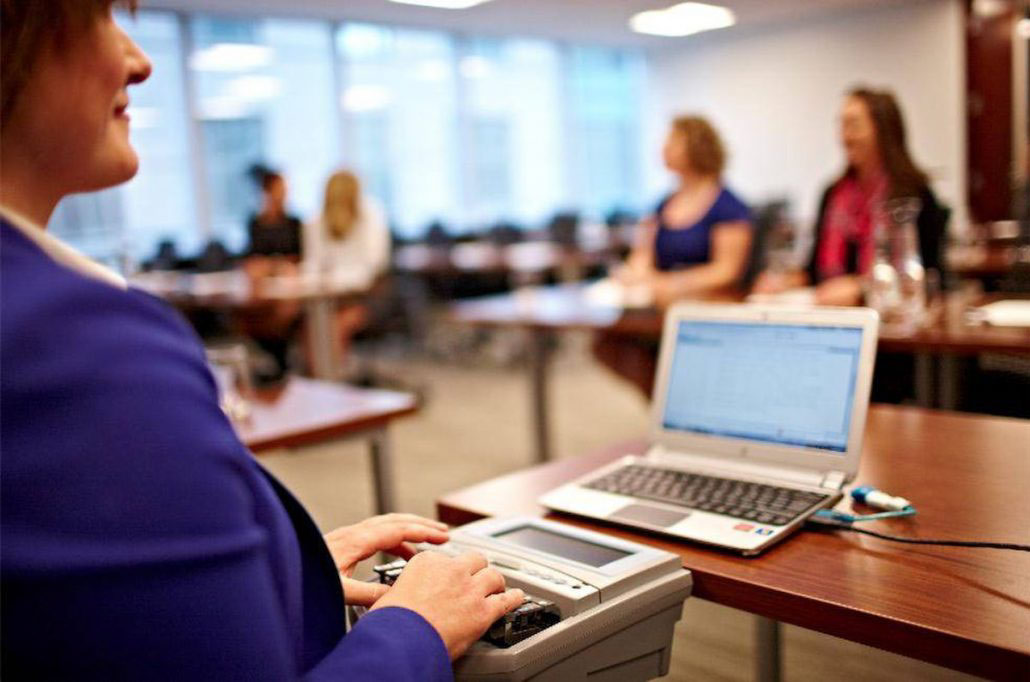
All our court reporters undergo a rigorous screening process. Many are registered professional reporters (RPR) or hold specialized certifications in computer-aided transcription and speech-to-text technology. Our national court reporting network ensures seamless coverage for court proceedings, depositions, and legal hearings, delivering precise transcripts for attorneys, judges, and legal professionals.Lexitas serves a wide range of litigation practice areas, including intellectual property, environmental, pharmaceutical, construction, labor and employment, and commercial litigation. Our expert realtime reporters provide communication access and court reporter services tailored to your specific case needs.
To view our court reporting firm registration status, click here.
Court Reporting Technology
 |
Remote DepositionsLegalView, our patented remote proceeding platform, provides a secure, easy-to-use, and completely interactive remote deposition experience for all participants. |
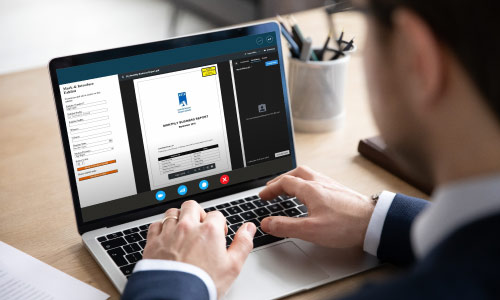 |
LegalView Exhibit ManagerA sophisticated and easy exhibit sharing platform to organize, stamp, and introduce digital exhibits. LegalView Exhibit Manager is simple to use, making it easy to introduce electronic exhibits in just a few simple steps. Learn More |
 |
Video Technology & ServicesAt Lexitas, proceedings are recorded digitally and can be electronically synchronized with the transcript. Additionally, each Lexitas office and conference room is equipped with state-of-the-art video conferencing systems. Learn More |
Full Support For Your Depositions
Lexitas provides full support for your depositions—we offer certified court reporters, real-time transcription services, and comprehensive legal support for depositions, hearings, and trials. Whether you need verbatim records, live transcription, or secure digital transcripts, our professionals ensure accuracy, efficiency, and compliance in every proceeding.Nationwide Deposition Suites
Need a deposition room beyond our network of 200+ conference rooms? Our scheduling team will work with you to find a location that meets your geographic and technology needs through our national affiliate network.
Learn more
Realtime Court Reporting
Videoconferencing
Lexitas video conferencing services include operator-assisted support every step of the way. All conference endpoints are contacted by our technically trained staff members prior to scheduled meetings ensuring all locations are properly pre-configured and tested.
Interpreters
Voted Best Court Reporting & Deposition Services Provider
_HOF.png?language=en-US "TXL0608202672512LEXITAS_Court Reporting & Deposition Service Provider(Austin)_HOF")



_Winner.png?language=en-US "TXL0608202672512LEXITAS_Court Reporting & Deposition Service Provider (Houston)_Winner")



Court Reporter Resources & Benefits
At Lexitas, we value our independent contractors and want to support them in any way we can. We have pulled together several industry resources and have partnered with outside vendors to bring you additional support.Court Reporting Frequently Asked Questions
What is stenography?
How does stenography work?
What does a court reporter do?
Key responsibilities include:
- Capturing spoken testimony accurately
- Managing and marking exhibits during proceedings
- Maintaining the integrity of the official record
- Producing certified transcripts
- Providing real-time transcription when requested
Does Lexitas provide litigation support?
Services include:
- Court reporting
- Legal transcription
- Videography services
- Alternative dispute resolution (ADR) support
- Records retrieval
- Process service
- Trial services
- Legal staffing
- Case management through eLaw®
Can Lexitas provide certified deposition transcripts?
Can Lexitas support legal transcription services nationwide?
What are the different methods of capturing the record?
Stenographic reporting
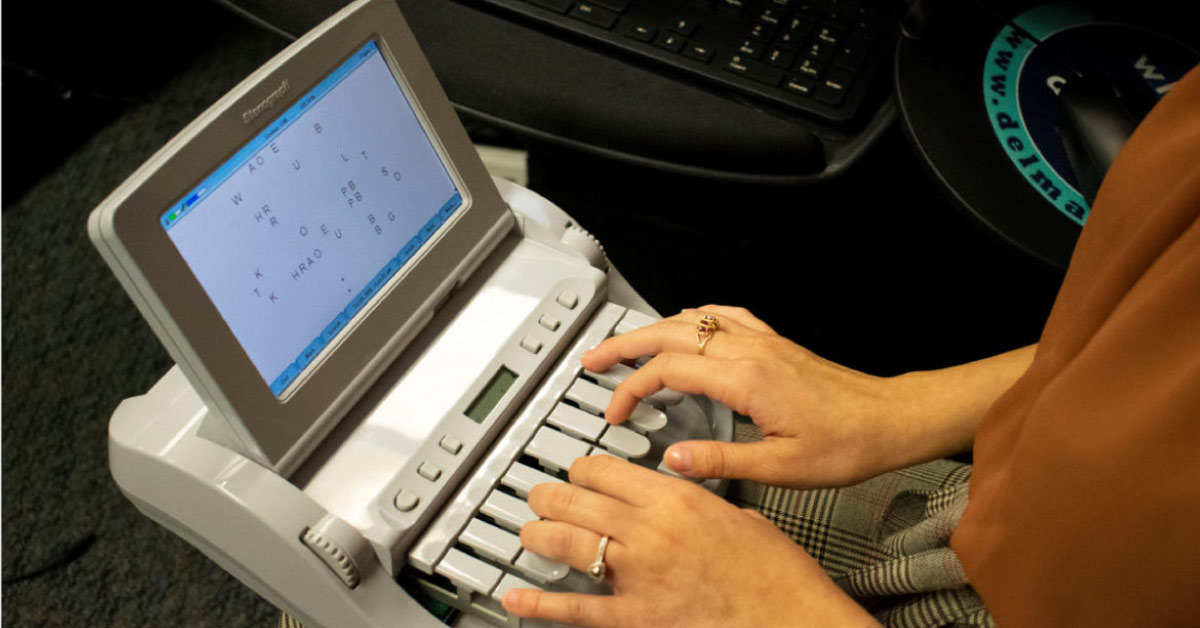
- Uses a stenotype machine operated by a trained court reporter
- Captures speech in real time using shorthand keystrokes
- Translates notes into text using computer-aided transcription (CAT) software
- Supports real-time transcription during proceedings
- Widely considered the most accurate method for complex litigation
- Uses high-quality audio recording equipment to capture proceedings
- A digital reporter monitors the session and adds annotations
- Transcription is completed after the proceeding
- Often used as a cost-effective alternative for less complex matters
- The reporter repeats spoken words into a voice mask device
- Speech recognition software converts the audio into text
- Used in select jurisdictions and specialized settings
What is legal transcription and how does it differ from court reporting?
The key difference between legal transcription and court reporting is when and how the record is created:
- Court reporting captures the official record in real time during a live proceeding
- Legal transcription converts a recording into text after the event has concluded
- Court reporters are present during the proceeding, while transcriptionists work from recordings
- Court reporting can provide real-time transcripts, while transcription cannot
- Court reporting = live capture of the record
- Legal transcription = post-event transcription of recorded content
Can Lexitas help me find a local court reporter?
Can Lexitas deliver deposition summary services for multiple depositions?
What AI deposition summary tools does Lexitas offer?
Deposition Insights™
Deposition Insights™ is an AI-enabled tool that summarizes and analyzes deposition transcripts. It uses natural language processing and machine learning to identify key themes, testimony, and important details, helping attorneys quickly understand the record.
Deposition Insights+
Deposition Insights+ builds on Deposition Insights™ with advanced capabilities, including:
- An on-demand AI assistant for transcript analysis
- Advanced search across deposition content
- Identification of contradictions and key admissions
- Exhibit summaries for faster review
- Video-based behavioral insights
How do you become a court reporter?
The typical path includes:
- Completing an accredited court reporting training program
- Developing speed and accuracy in capturing spoken language
- Obtaining required certifications, which vary by jurisdiction
- Gaining experience in legal proceedings, either in person or remotely
- Pursuing continuing education and advanced skills, such as real-time reporting