
What Is the Role of a Court Reporter?
Accuracy, Neutrality, and Expertise in the Legal Record
January 8, 2026
Court Reporting
What Is the Role of a Court Reporter?
That’s why professional court reporting is built around three pillars: accuracy, neutrality, and expertise. At Lexitas, those pillars are reinforced by long-tenured reporters, rigorous standards, and technology that supports the human work, not replaces it.
What A Court Reporter Is Responsible For Before A Proceeding
A court reporter’s job starts before anyone goes on the record. Preparation is where accuracy becomes repeatable, not accidental. Typical pre-proceeding responsibilities include:- Confirming logistics (remote or in-person), start times, appearances, and any special requirements
- Reviewing case-specific terminology (medical terms, corporate names, technical products, acronyms, and locations)
- Planning speaker management so interruptions and rapid exchanges can still be captured cleanly
- Coordinating exhibit handling, especially when exhibits are electronic or introduced quickly
What Happens During The Proceeding: Capturing The Record With Precision
|
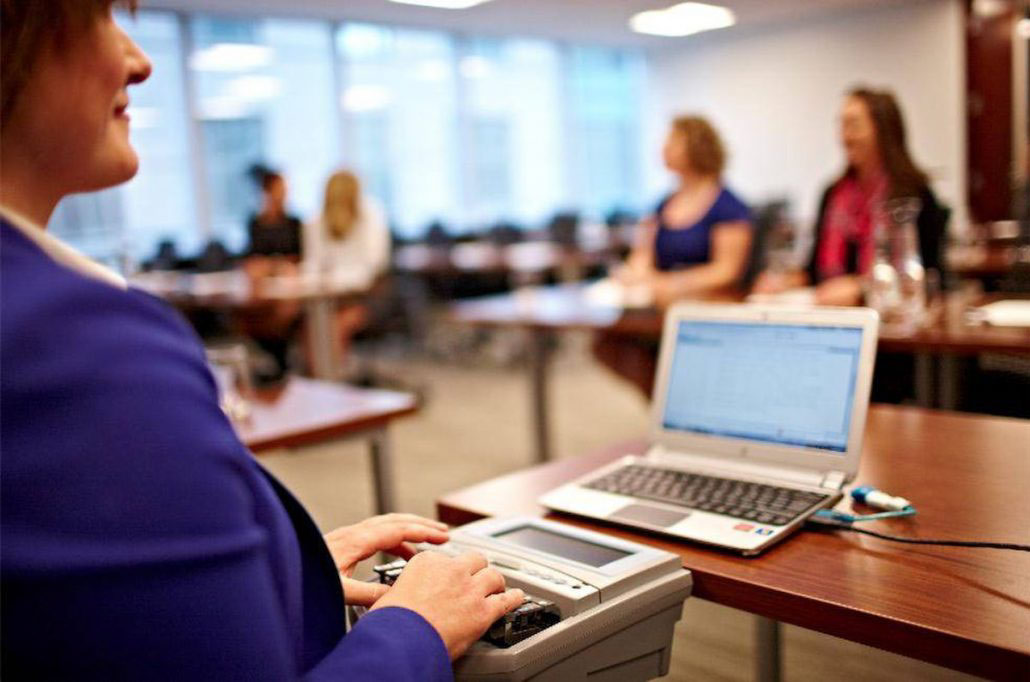
If you’ve ever wondered about the role of a court reporter it’s this: capture who said what and when it was said, without editorializing. That requires skill under real-world conditions, like cross-talk, accents, fast pacing, and emotionally charged testimony.
Lexitas also supports attorneys with tools such as real-time reporting, which allows legal teams to follow the testimony as it happens and flag critical portions immediately. |
 |
After The Proceeding: Turning Raw Testimony Into A Reliable Transcript
The record doesn’t become useful just because the proceeding ends. Post-proceeding work is where a transcript becomes dependable for motion practice, settlement evaluation, trial prep, and appeal.Key tasks after the session often include:
- Reviewing and editing for consistency and readability without changing meaning
- Applying quality controls for names, spellings, and specialized terms
- Finalizing secure delivery so authorized parties can access transcripts promptly
- Supporting add-ons like rough drafts or certified copies when requested
Why Neutrality Matters As Much As Accuracy
A transcript is only as valuable as the trust placed in it. Neutrality is what makes the record usable across both sides of a dispute. The reporter does not advocate, interpret, or “clean up” testimony. They capture it faithfully, even when it’s messy, repetitive, or uncomfortable.In practical terms, neutrality shows up as:
- Uniform treatment of all speakers
- No selective emphasis on one side’s questions or answers
- Consistent formatting and procedure regardless of case dynamics
- Strict confidentiality practices that protect sensitive records and information
Credentials, Standards, And What Legal Teams Should Look For
Not all providers operate with the same standards. Legal teams often evaluate court reporting partners based on their experience, reliability, and the safeguards they provide to reduce risk. When you’re deciding how to find a court reporter, look for practical indicators of professionalism:- Certification and continuing education (as applicable by jurisdiction)
- Demonstrated impartiality and consistent record handling
- Clear security practices for transcript access and storage
- Experience with complex matters, including technical or medical testimony
- Operational coverage that can support fast scheduling and multi-location needs
How Court Reporting Supports The Bigger Litigation Workflow
Court reporting isn’t isolated from the rest of litigation operations. It connects directly to how teams prepare, evaluate testimony, and organize case materials.For example, transcripts are central to the deposition process because they support:
- Impeachment planning and witness tracking
- Designations and counter-designations
- Motion practice that depends on precise citations
- Settlement strategy informed by exact testimony
Technology That Enhances Expertise (Without Replacing It)
Modern proceedings move fast. Lexitas uses technology to make the record more accessible and workflows more efficient, while keeping expert oversight at the center. That includes:- Real-time reporting for immediate visibility into testimony
- Secure digital access for transcripts and related materials
- AI-enabled tools like Deposition Insights+ to summarize and identify key testimony
Closing Takeaway And Next Step
If your team is still wondering about the role of a court reporter, the simplest answer is that a court reporter safeguards the legal record through accuracy, neutrality, and professional judgment, supported by secure, modern tools that keep litigation moving.Need real-time transcription or secure transcript access for your next proceeding? Schedule your next deposition with a trusted Lexitas reporter.
Related Resources
Articles
Court Reporting
What You Should Expect from Your Court Reporting Firm
Here are five things to expect from your court reporting firm to have your case go smoothly.
Read More
Articles
Court Reporting
What is Court Reporting?
Learn what court reporting is, how it supports legal proceedings, and why professional expertise is essential for accuracy, compliance, and due process.
Read More
Articles
Court Reporting
What Is Legal Transcription vs. Court Reporting?
Learn what legal transcription is, how it differs from court reporting, and how both work together to support accurate, efficient litigation.
Read More