
When Should Legal Teams Request Realtime Court Reporting for a Deposition?
June 29, 2026
Court Reporting
When to Request Realtime Court Reporting
Key Takeaways
|
Legal teams should request realtime court reporting when they need live access to deposition testimony to support questioning, issue tracking, remote collaboration, or same-day review.
It is most useful when testimony is complex, fast-moving, technical, strategically important, or shared across multiple attorneys, experts, or locations. Realtime access is not necessary for every deposition, but it can be valuable when waiting for the final certified transcript would slow case strategy or create avoidable risk.
What Is Realtime Court Reporting?
Realtime court reporting is the live translation of a court reporter’s stenographic notes into readable text during a deposition or legal proceeding. Attorneys and authorized team members can view the text as testimony is given, often through a laptop, tablet, or secure remote platform. The realtime feed supports live review, but it is not the certified transcript.For broader context on the roles of the reporter, transcript, and legal record, readers can review what court reporting includes.
In a realtime deposition, the court reporter captures testimony through stenographic writing and realtime transcription software. As the witness answers questions, the text appears for approved viewers. This can include examining counsel, co-counsel, paralegals, litigation support teams, in-house counsel, insurance representatives, and experts when access is arranged.
The value is simple. The legal team can see the testimony while the deposition is still happening. That live view can help the team confirm wording, mark issues, search for earlier answers, and decide whether a follow-up question is needed before the witness moves on.
Why Realtime Court Reporting Matters During Depositions
Realtime matters because it lets legal teams work from the live record rather than relying solely on memory, handwritten notes, or delayed transcript delivery. In the right deposition, this can improve follow-up questioning, reduce missed issues, support remote collaboration, and speed up post-deposition review.When live access to testimony affects strategy or coordination, realtime court reporting services can help legal teams follow the record as it develops.
- Questioning Support: Attorneys can confirm exact wording before moving to the next topic.
- Issue Tracking: Legal teams can flag admissions, contradictions, unclear answers, exhibit references, and follow-up needs in real time.
- Remote Collaboration: Remote co-counsel or experts can monitor the same live text record and provide input without being physically present.
- Faster Review: Paralegals and litigation support professionals can begin organizing testimony while the deposition is ongoing.
When Should Legal Teams Request Realtime Court Reporting?
Legal teams should request realtime court reporting when the deposition’s complexity, speed, stakes, team structure, or transcript needs make live access to testimony useful. If the proceeding is routine, short, cooperative, and low-complexity, standard court reporting with prompt certified transcript delivery may be enough.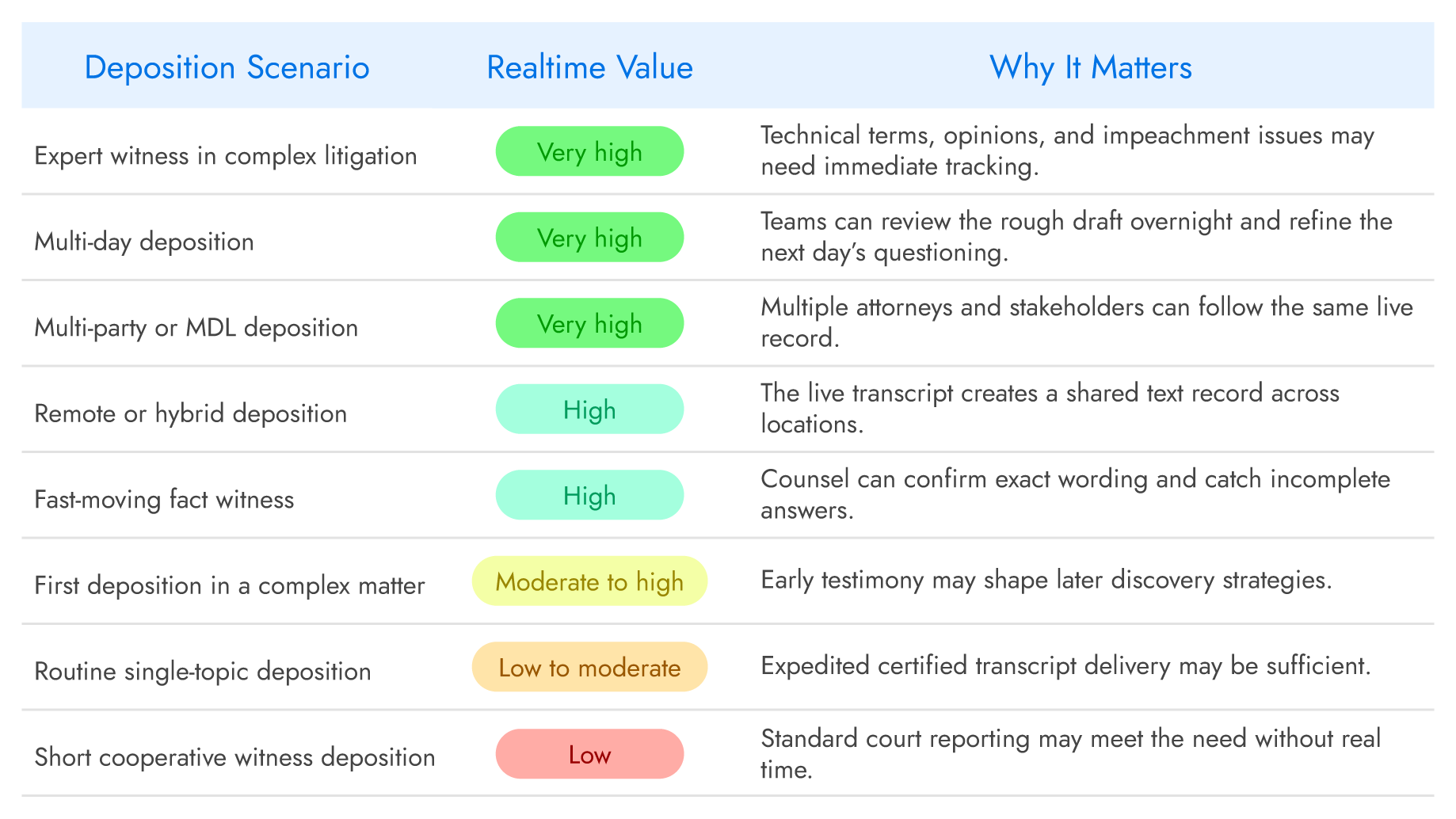
Expert witness depositions are one of the clearest use cases. Experts often use medical, scientific, engineering, financial, or product-specific language. If a term is unclear, counsel can ask for clarification on the record before the witness moves on.
Multi-party proceedings are another strong fit. In complex commercial litigation, mass-tort matters, insurance litigation, or multi-defendant cases, several people may need to follow the testimony at once. Realtime access provides the team with a single shared view of the live record.
Remote and hybrid depositions also increase the value of realtime reporting. When participants are spread across different offices, cities, or states, a live deposition transcript can help everyone stay aligned.
How to Decide Whether Realtime Is Worth Requesting
Use the decision process below to evaluate whether realtime court reporting is appropriate for the deposition. For a related preparation resource, see Lexitas’s guidance on realtime deposition preparation.- Assess the witness.
- Is the witness an expert, corporate representative, technical specialist, treating provider, economist, engineer, or high-stakes fact witness?
- Is the witness likely to speak quickly, use specialized terms, or give evasive answers?
- Assess the testimony.
- Will testimony involve medical, scientific, financial, engineering, product, insurance, or technical terminology?
- Will small wording differences affect liability, damages, causation, credibility, or impeachment?
- Assess the proceeding structure.
- Is the deposition multi-party, multi-day, remote, hybrid, or part of a larger coordinated litigation matter?
- Will several attorneys, experts, or client representatives need to follow the testimony live?
- Assess the legal team’s workflow.
- Will co-counsel, in-house counsel, paralegals, experts, or litigation support professionals annotate or monitor the live transcript?
- Will the team need to identify admissions, contradictions, exhibit references, or follow-up questions during the proceeding?
- Assess downstream transcript needs.
- Will the team need same-day review, overnight preparation, expedited transcript delivery, trial impeachment planning, mediation preparation, or post-deposition analysis?
- Would waiting for the certified transcript create timing pressure or strategic risk?
- Confirm availability and setup.
- Request realtime court reporting at scheduling.
- Confirm the reporter, platform access, authorized feed recipients, transcript delivery needs, and related deposition support services.
How Realtime Works With Remote Depositions, Legal Video, and Electronic Exhibits
Realtime court reporting works best when it is coordinated with the full deposition setup. When a witness, counsel, experts, or client representatives are not all in the same room, remote deposition support can help keep testimony, access, and participation organized.Legal video may also be relevant when the visual record of witness testimony matters. In those matters, video deposition support can complement the written transcript by preserving the witness's presentation, demeanor, and delivery of testimony.
- Remote and Hybrid Access: Distributed teams benefit from a shared live text record across locations.
- Legal Video: Video can preserve witness presentation, while the transcript preserves the searchable written record.
- Electronic Exhibits: Exhibit tools help teams introduce and manage documents without disrupting questioning.
- Post-Deposition Workflow: Transcript delivery and analysis tools help turn the live and certified record into a usable work product.
What Legal Teams Can Do With a Live Deposition Transcript
A live deposition transcript helps the legal team use testimony while it is being created. The strongest use cases are live questioning support, issue tracking, remote collaboration, and immediate review.Realtime can also support the next phase of case preparation by giving legal teams a clearer starting point for review, summaries, and follow-up. To add depth, this section can naturally point readers to what happens after a deposition.
- Counsel can scroll back to confirm the exact wording before asking a follow-up question.
- Team members can highlight testimony and tag issues such as liability, damages, causation, impeachment, exhibit, or follow-up needed.
- Remote participants can monitor the same live text record and flag concerns to examining counsel.
- The team can use keyword search to locate earlier testimony without interrupting the deposition.
It can also help with post-deposition review. If the team flags key testimony during the proceeding, the rough draft may already include useful notes, highlights, or issue markers by the time the session ends. That can save time when preparing summaries, planning follow-up discovery, or reviewing testimony with a client or expert.
What Should Legal Teams Confirm Before Scheduling Realtime?
Legal teams should confirm realtime needs at scheduling, not after the deposition begins. Not every reporter can provide a realtime feed, so the provider needs advance notice to assign a realtime-capable reporter. Early coordination gives the provider time to assign the right reporter, prepare the technical setup, manage authorized feed access, and align transcript delivery expectations.- Realtime Need: Confirm that realtime court reporting is needed for the deposition.
- Proceeding Format: Confirm whether the deposition is in person, remote, or hybrid.
- Case Glossary: Provide names, acronyms, technical terms, product names, medical terms, and other specialized vocabulary.
- Authorized Recipients: Identify all participants who should receive access to the realtime feed.
- Related Services: Confirm whether the team also needs legal video, electronic exhibits, rough draft delivery, expedited transcript delivery, or Deposition Insights.
It also helps to confirm who needs access. Realtime feeds should be available only to authorized participants. That may include attorneys in the room, remote co-counsel, in-house legal team members, consulting experts, paralegals, or litigation support staff.
What to Watch Out for With Realtime Court Reporting
Realtime court reporting is useful, but legal teams need to understand its limits. The live feed is a working draft, so the team should use it for live strategy and review while relying on the certified transcript for formal use.The U.S. Courts’ Federal Court Reporting Program defines a realtime transcript as a draft, unedited transcript produced by a certified realtime reporter. This definition supports the key distinction between live transcript access and the final certified record.
- The realtime feed is unedited and uncertified.
- The live text may include untranslated words, rough spellings, or draft notations.
- The certified transcript remains the official record for filings, citations, and formal transcript use.
- Realtime should be requested in advance, as not every court reporter provides it.
- Technical terminology should be shared with the reporter before the deposition through a case glossary.
Schedule Realtime Court Reporting When Live Testimony Access Matters
Realtime court reporting is most valuable when live access to the deposition record helps the legal team make better decisions during the proceeding. For complex testimony, remote collaboration, multi-party litigation, multi-day examinations, or immediate review needs, realtime can support a more controlled and efficient deposition workflow.Lexitas provides realtime court reporting as part of a broader deposition support solution, including court reporting, remote deposition support, legal video, electronic exhibits, transcript delivery, and Deposition Insights. By coordinating these services through Lexitas, legal teams can keep the deposition record, supporting technology, and post-deposition review process aligned from the start.
Need realtime court reporting for an upcoming deposition? Schedule with Lexitas to coordinate the reporter, live transcript access, remote or in-person deposition support, legal video, exhibits, and transcript services your legal team needs.
FAQs About Realtime Court Reporting
Is realtime court reporting the same as the certified transcript?
No. Realtime court reporting provides a live, unedited feed of testimony during the proceeding. The certified transcript is reviewed, finalized, and certified after the deposition and serves as the official record.Is realtime court reporting necessary for every deposition?
No. Realtime is most useful for complex, technical, fast-moving, multi-party, remote, hybrid, or multi-day depositions. Routine depositions may only require standard court reporting and timely delivery of certified transcripts.When should attorneys request realtime for a deposition?
Attorneys should request realtime reporting when live access to testimony will help with questioning, issue tracking, remote collaboration, same-day review, or preparation for additional deposition sessions.Can remote co-counsel or experts view the realtime transcript?
Yes, when authorized access is arranged. Realtime streaming can allow co-counsel, in-house counsel, paralegals, experts, and litigation support professionals to follow testimony from different locations.What should legal teams provide before a realtime deposition?
Legal teams should provide a case glossary, confirm authorized feed recipients, identify transcript delivery needs, and coordinate any remote deposition, legal video, or electronic exhibit requirements before the deposition date.Can legal teams use the realtime feed for impeachment?
The realtime feed can help attorneys flag potential impeachment points as they occur, but the certified transcript is the formal record used for later transcript citations and trial preparation.Related Resources
Articles
Court Reporting
Court Stenography And Why It Still Matters Amid the Court Reporter Shortage
Learn why court stenography still matters, how a court stenographer captures the record, and how the court reporter shortage is affecting courts, transcripts, and litigation strategy.
Read More
Articles
Court Reporting
What Legal Teams Should Know About AI, Summaries, and the Future of Testimony
Discover how deposition transcripts are evolving with AI and legal court reporting services. Learn how modern legal teams turn testimony into actionable insight faster.
Read More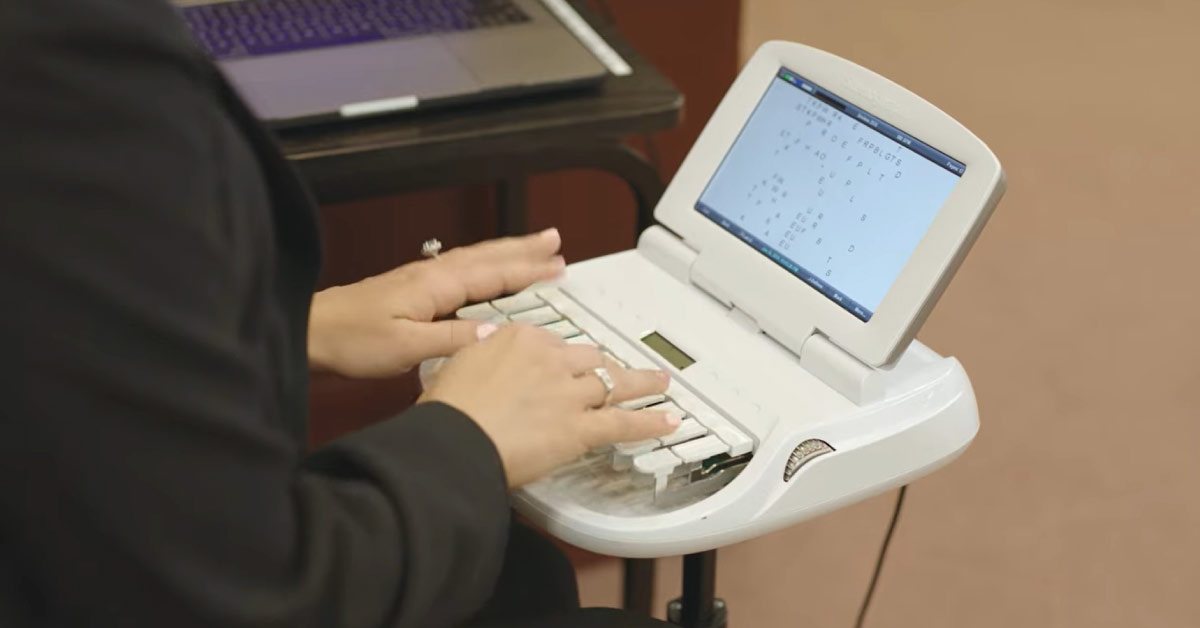
Articles
Court Reporting
What Is the Role of a Court Reporter?
Learn about the court reporter’s role in preserving accuracy, neutrality, and trust in the legal record from deposition to final transcript.
Read More